On this page you will find a solid introduction to the basics and specificities of sign language interpreting in a series of books recommended by experts in the field.
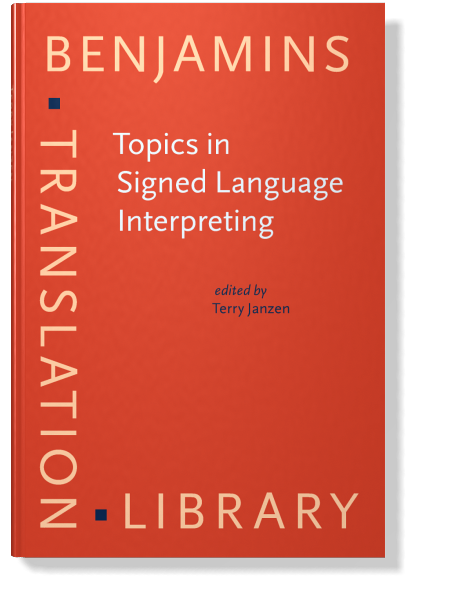
Topics in Signed Language Interpretation
Terry Janzen (Ed.), 2005, John Benjamins.
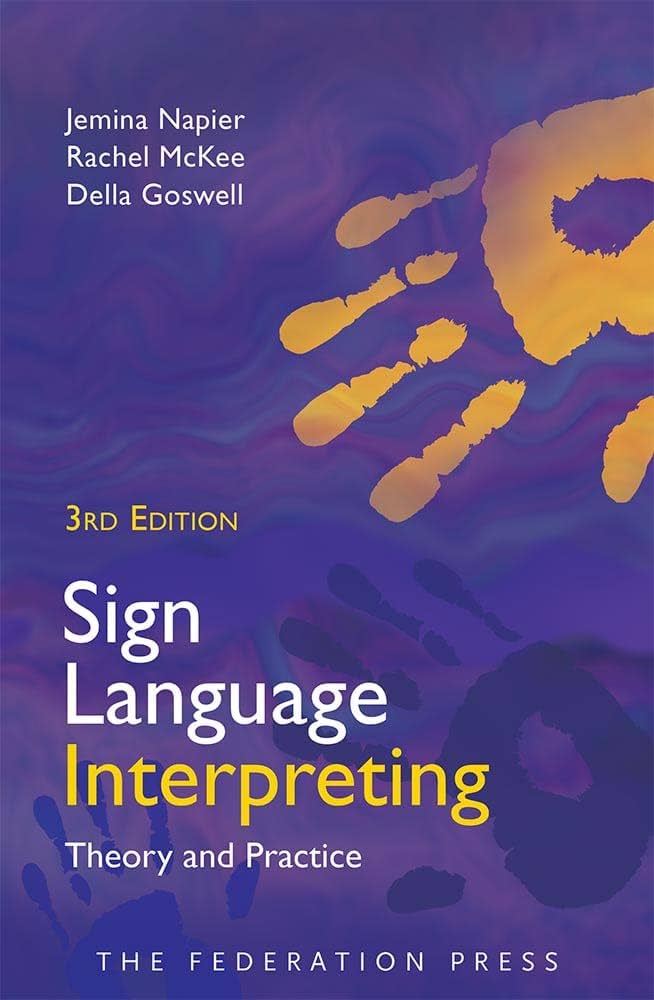
Sign Language Interpreting, Theory and Practice
3rd edition, By Jemina Napier, Rachel McKee and Della Goswell
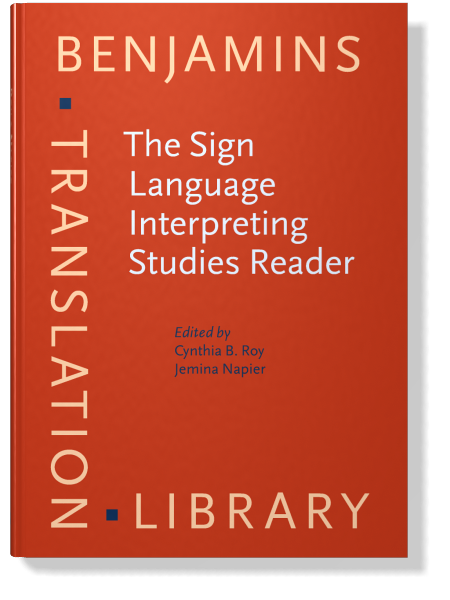
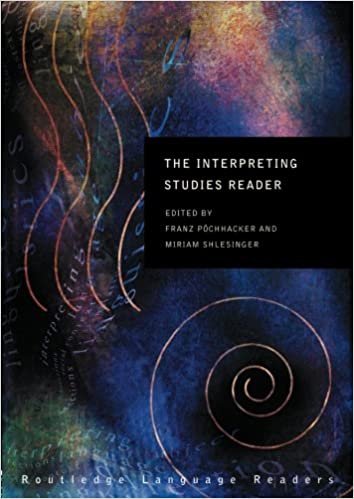
The Sign Language Interpreting Studies Reader
Cynthia B. Roy & Jemina Napier (Editors)
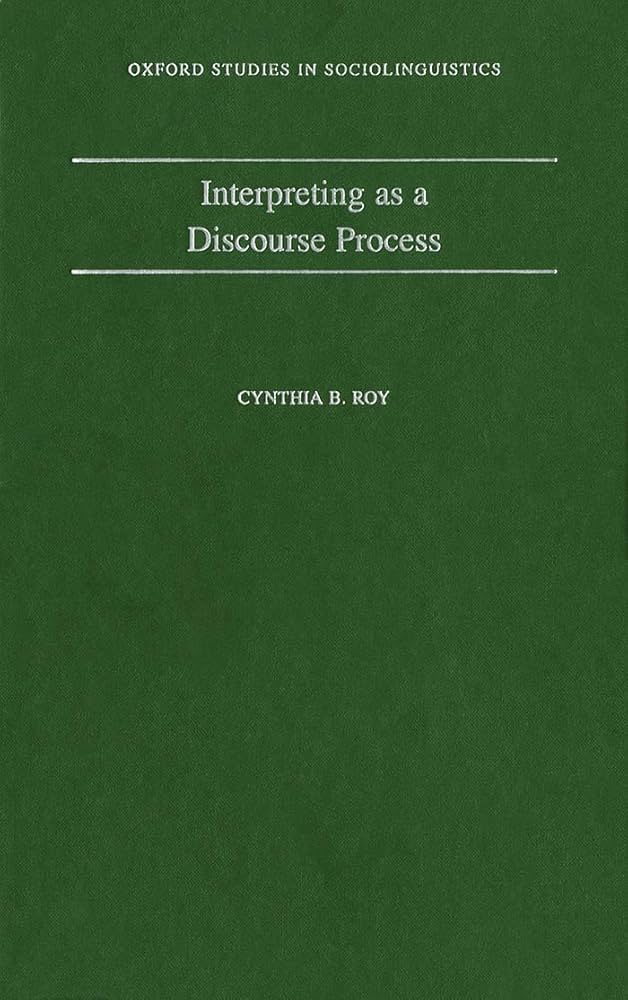
Interpreting as a Discourse Process,
Cynthia Roy
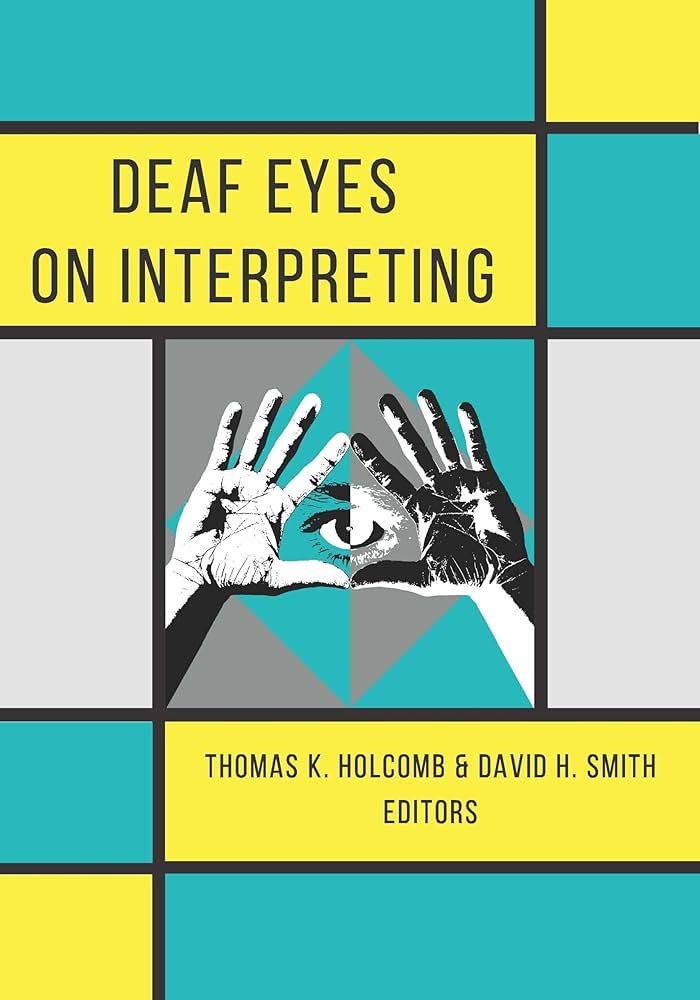
Deaf Eyes on Interpreting
2020 by Thomas K Holcomb (Editor), David H Smit
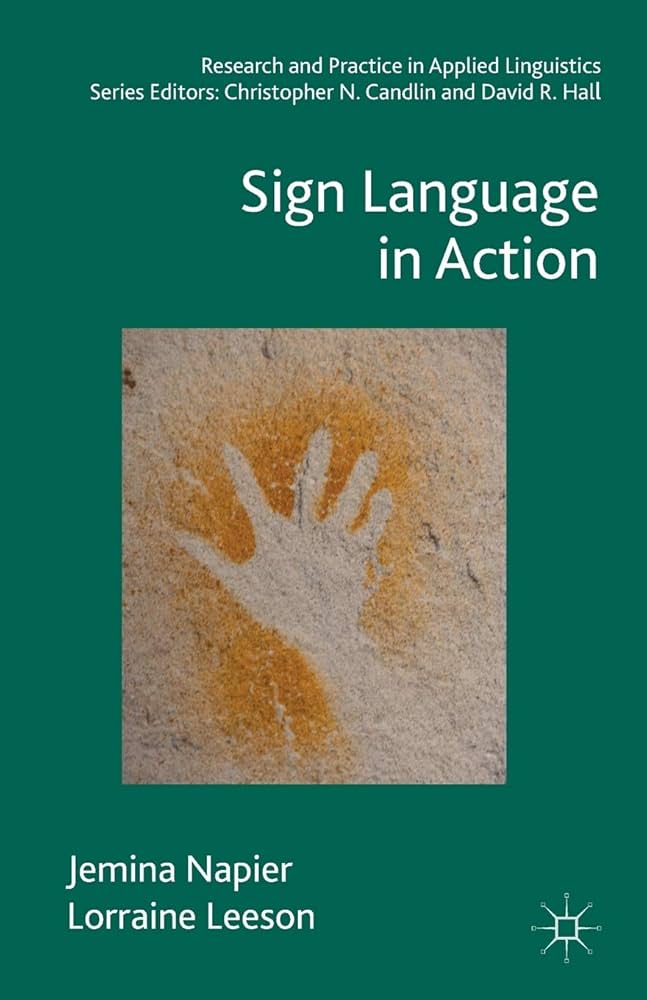
Sign language in action,
Jemina Napier (Author), Lorraine Leeson
Interpreting in legal settings
Debra Russell, & Sandra Hale, S. (Eds.), 2009, Gallaudet University Press
Though primarily about court interpreting this book also includes material relating to interpreting for deaf people in legal settings.
The work of interpreters in legal settings is filled with enormous complexity and challenges. This engrossing volume presents six, data-based studies from both signed and spoken language interpreter researchers on a diverse range of topics, theoretical underpinnings, and research methodologies.
Advances in Interpreting Research
Laurie Swabey and Brenda Nicademus (Eds), 2011, John Benjamins
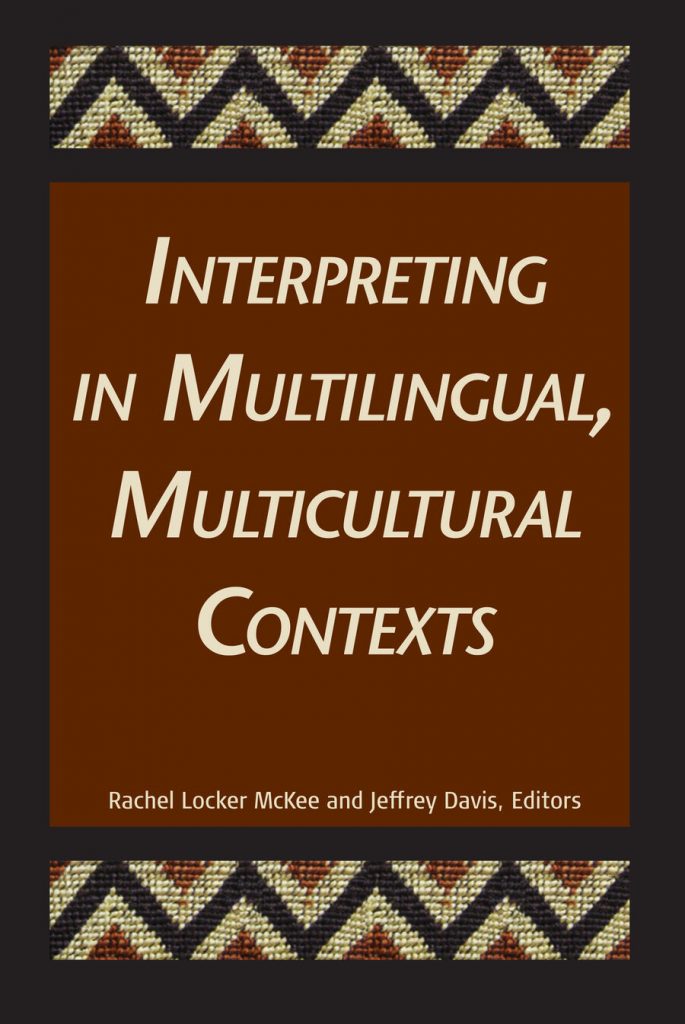
Interpreting in Multilingual, Multicultural Contexts
Rachel Locker McKee and Jeffrey E. Davis, Editor
On this page you will find a brief introduction to some of the more useful texts published for students of conference interpreting.
Conference Interpreting Explained.
Jones, Roderick. 1998 Routledge.
Conference Interpreting Explained.
Tiselius, E., Routledge.
Pitched in the introduction to land somewhere between only practical and dauntingly detailed it hits the mark perfectly…
and in a very engaging style.
The book is well-structured, logically arranged and detailed without being overloaded.
“This comprehensive coursebook sets out an updated step-by-step programme of training, designed to meet the increasingly challenging conditions of the 21st century, and adaptable by instructors with the appropriate specializations to cover all these different applications in contemporary practice “
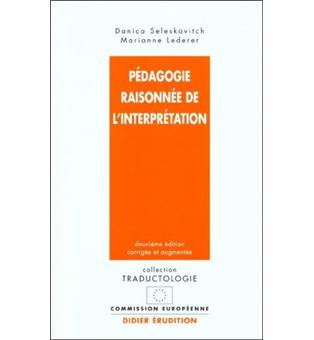
Pedagogie Raisonnee De L’interpretation (Traductologie) (Volume 4) (French Edition) (9782864606406): Lederer, M., Seleskovitch, , D. 1989.
Originally for trainers this distillation and practical explanation of Seleskovitch’s teaching theory and practice is still fantastically useful.
Download the full work as a pdf
L’interprete dans les conferences internationales
Danica Seleskovitch. 1968, Cahiers Champollion
Available in English as Interpreting for International Conferences: Problems of Language and Communication
This epoch-making book defined the profession at a time when there was almost nothing else in print and Danica Seleskovitch did more than anyone to raise the profile of interpreting.
This book remained the benchmark for 20 years and although the language, the attitude and the style have dated a little, it is still a very worthwhile read.
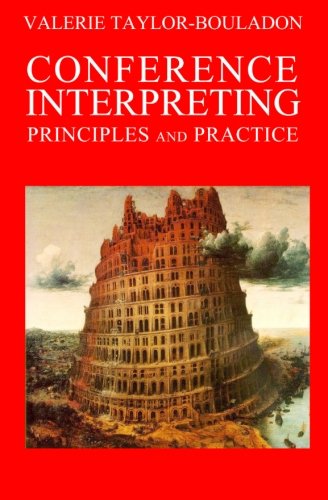
Conference Interpreting – Principles and Practice
Taylor-Bouladon, Valerie, Booksurge.
Le manuel de l’interprete.
Herbert, J., 1952 Geneve. Georg
Pre-history… but still one of few general books about interpreting. Out of print but available in most University libraries.
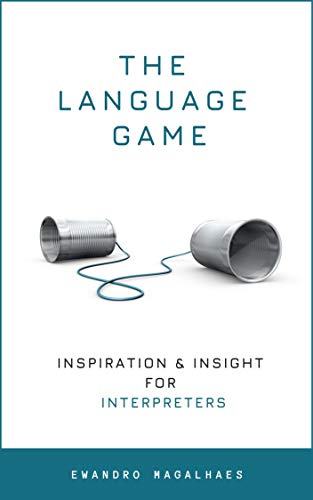
The language game
Ewandro Magalhaes 2019
Essays about the profession from a former Chief Interpreter.
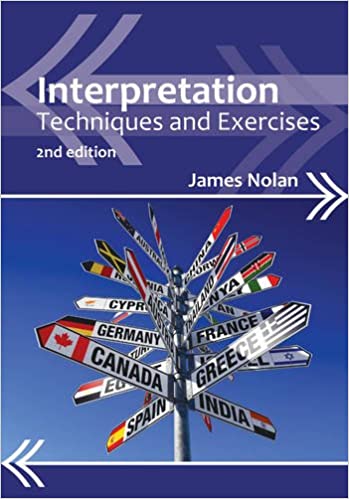
Nolan, James, 2005, Multilingual Matters.
Put together by senior UN intepreter James Nolan, offers some good strategies for simultaneous interpreting and interesting exercises to practise the same strategies. You will need Fr, En and Es in your combination to use all the examples though. Chapters 3, 4 and 5 are most useful. Don’t bother with all the language stuff.
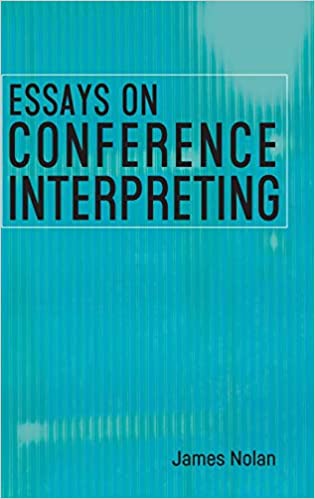
Essays on Conference Interpreting
Nolan, James, Multilingual Matters, 2020
“This book condenses the important lessons learned at key points during the author’s 30-year career as an intergovernmental conference interpreter and trainer, seeking to define what constitutes good interpreting and how to develop the skills and abilities that are conducive to it”
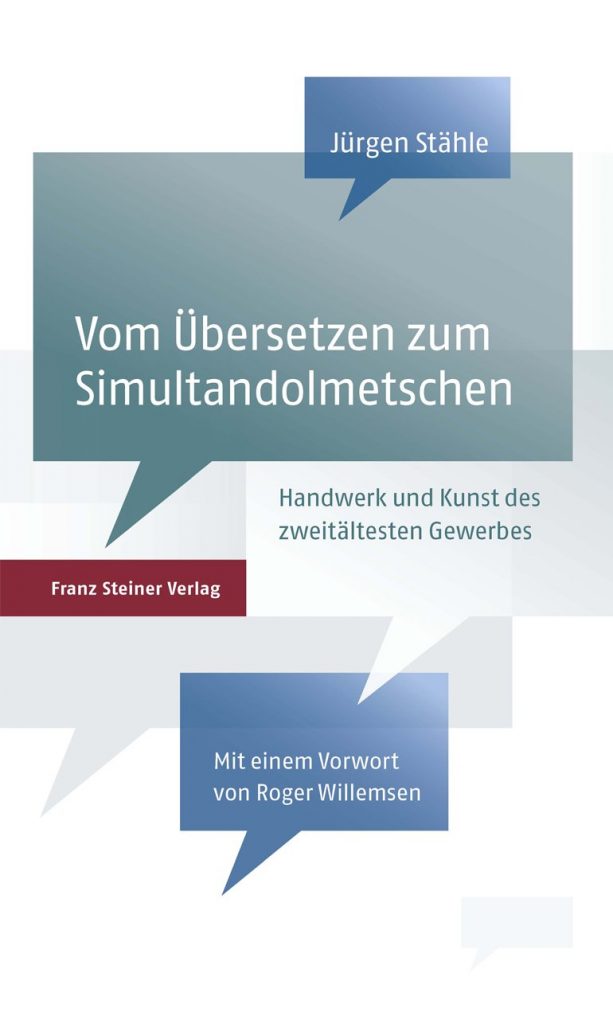
Vom Uebersetzen zum Simultandolmtschen
Juergen Staehle 2009
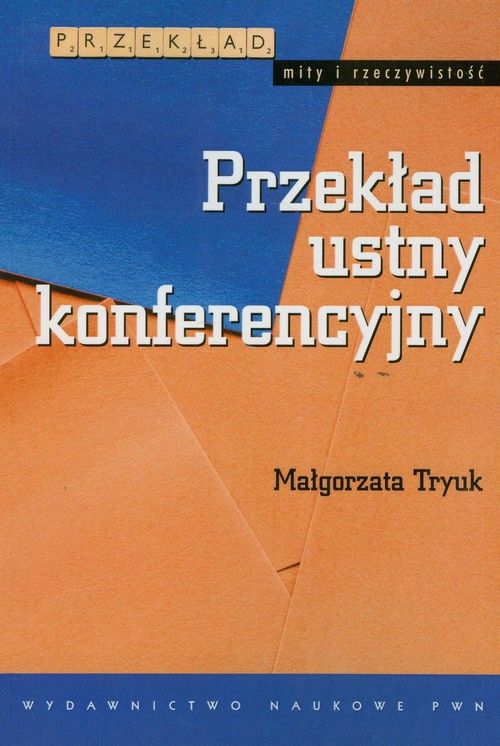
Przekład ustny konferencyjny
Małgorzata Tryuk, PWN, 2007
“Jakie predyspozycje musi posiadać tłumacz ustny?
Jaką rolę odgrywa pamięć w tłumaczeniu ustnym i jak ją ćwiczyć?
Kiedy po raz pierwszy zastosowano przekład konsekutywny, kiedy symultaniczny, a kiedy przekład ustny maszynowy?
Jakie są możliwości dalszego rozwoju przekładu konferencyjnego?”
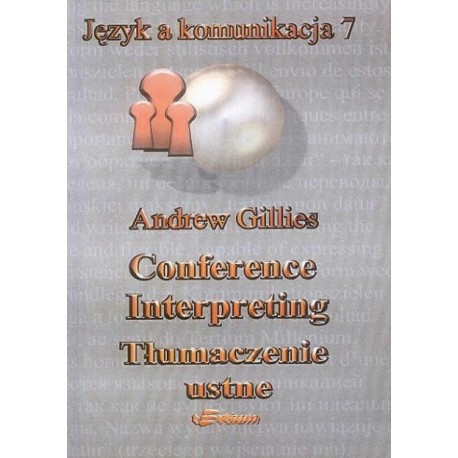
Conference Interpreting – A New Students’ Companion
Andrew Gillies, Tertium Cracow, 2004
An updated version of the 2001 publication containing a whole series of practice exercises for the different skills that go to make up conference interpreting.
Available here
Interpreting: From Preparation to Performance. Recipes for practitioners and Teachers
Compiled by Csilla Szabó et al, British Council, Budapest. ISBN963 20 6409 7
A compilation of practice ideas compiled in English in Budapest….delicious.
Available from Csilla Szabó
Théorie et Pratique de l’interprétation
Henri Van Hoof, 1962
A classic and hard to find. But still useful.
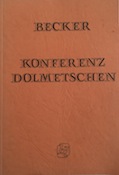
Konferenzdolmetschen
Becker 1975
Useful and entertainingly written (in German). Pretty impossible to find! Some parts out of date
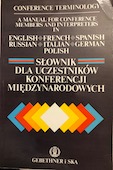
Conference Terminology
Herbert, J. Gebethner i Ska, 1991, Warsaw.
Offers useful conference idiom in En, Fr, De, Sp, Ru, It, and more recently PL.
Handy if a little dated. Hard to find in the shops, but should be in most University libraries.